
Last updated November 15, 2026
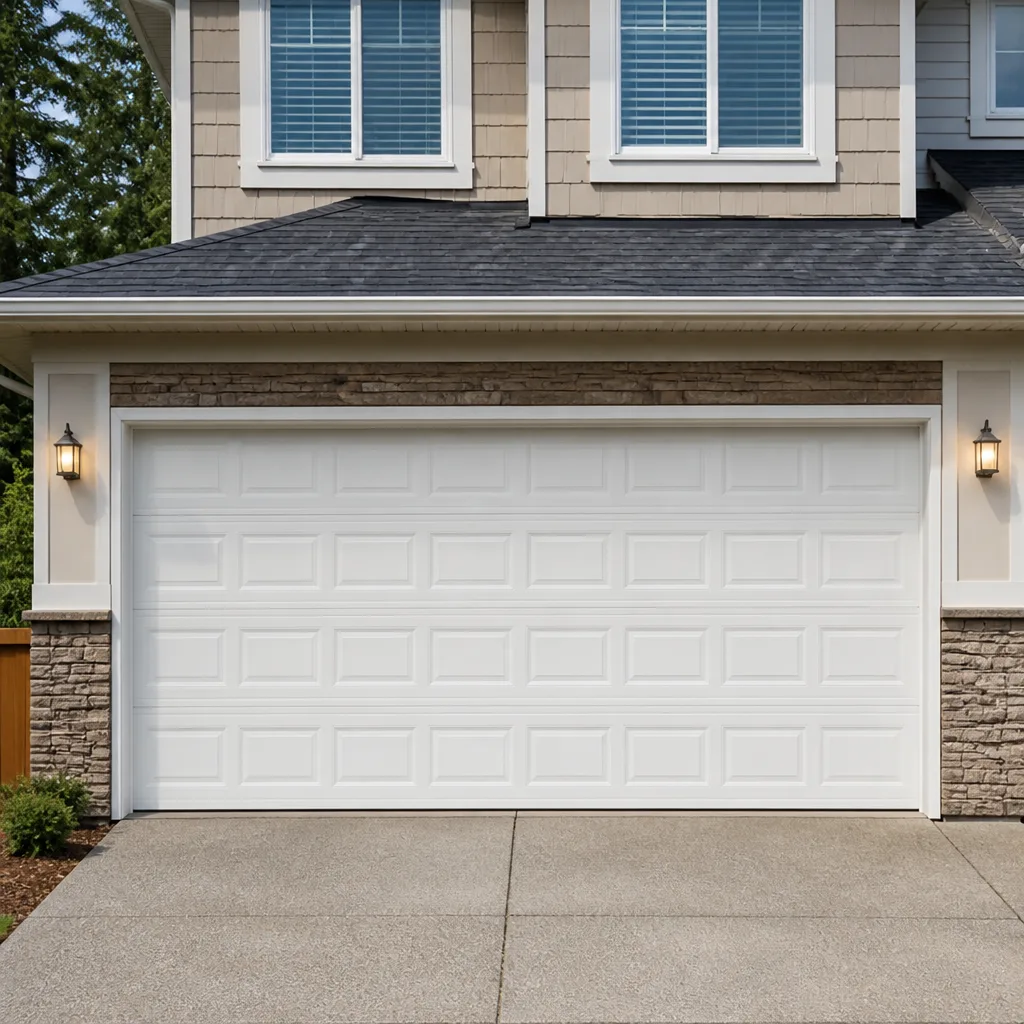 Raised-panel steel
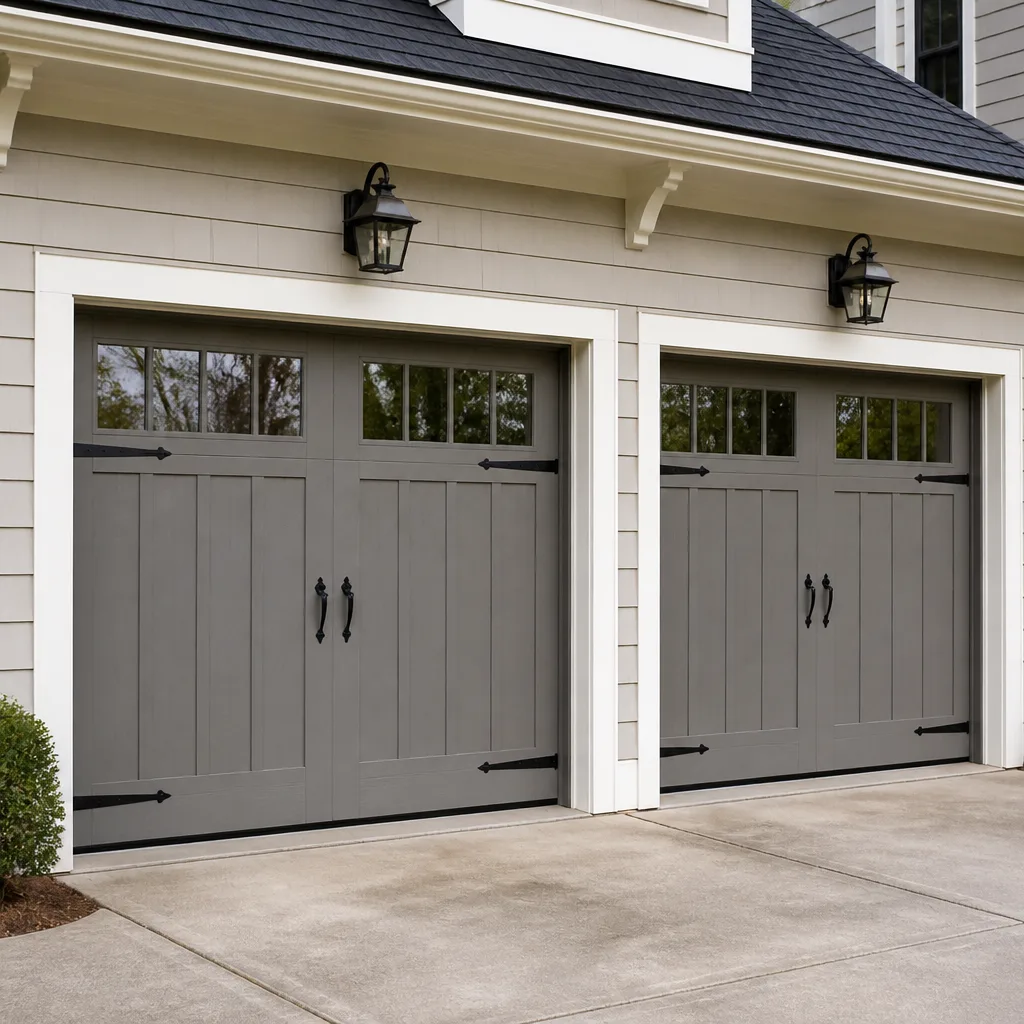 Carriage house
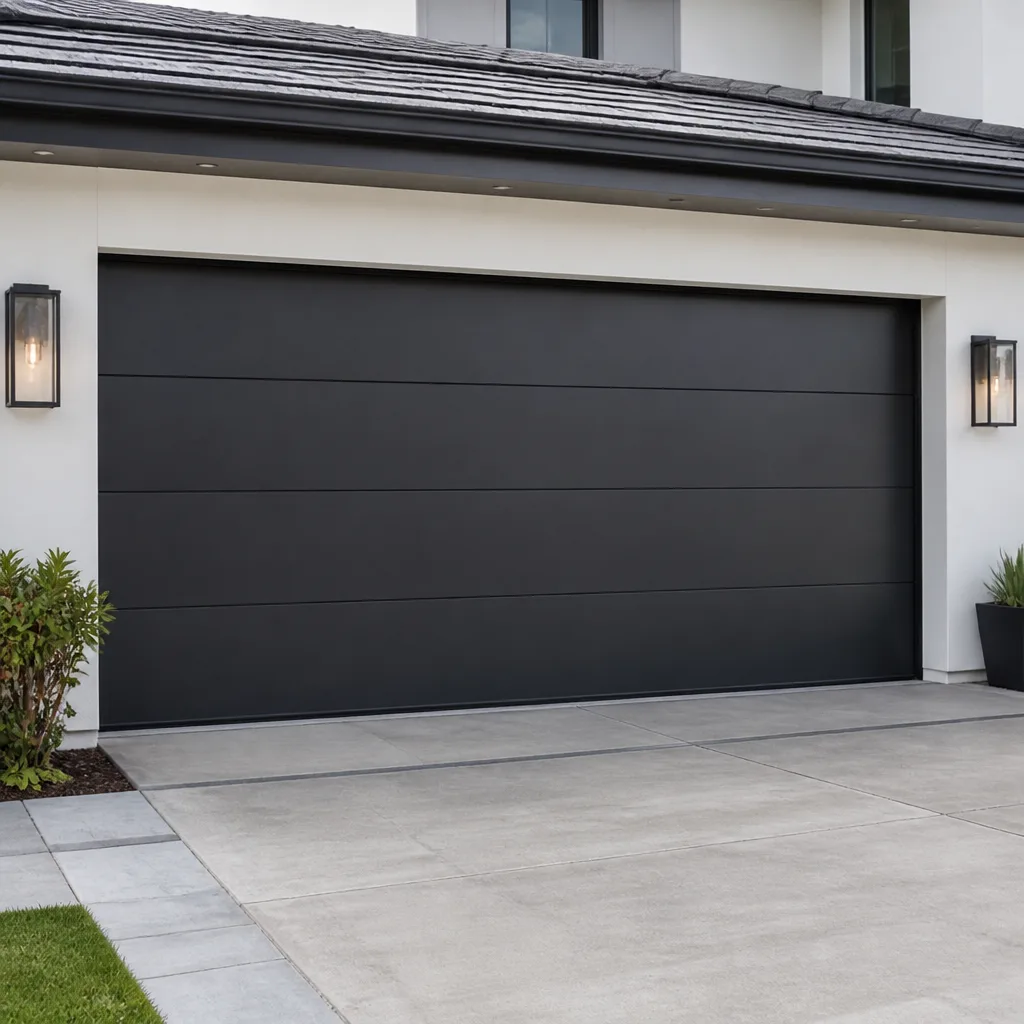 Modern flush
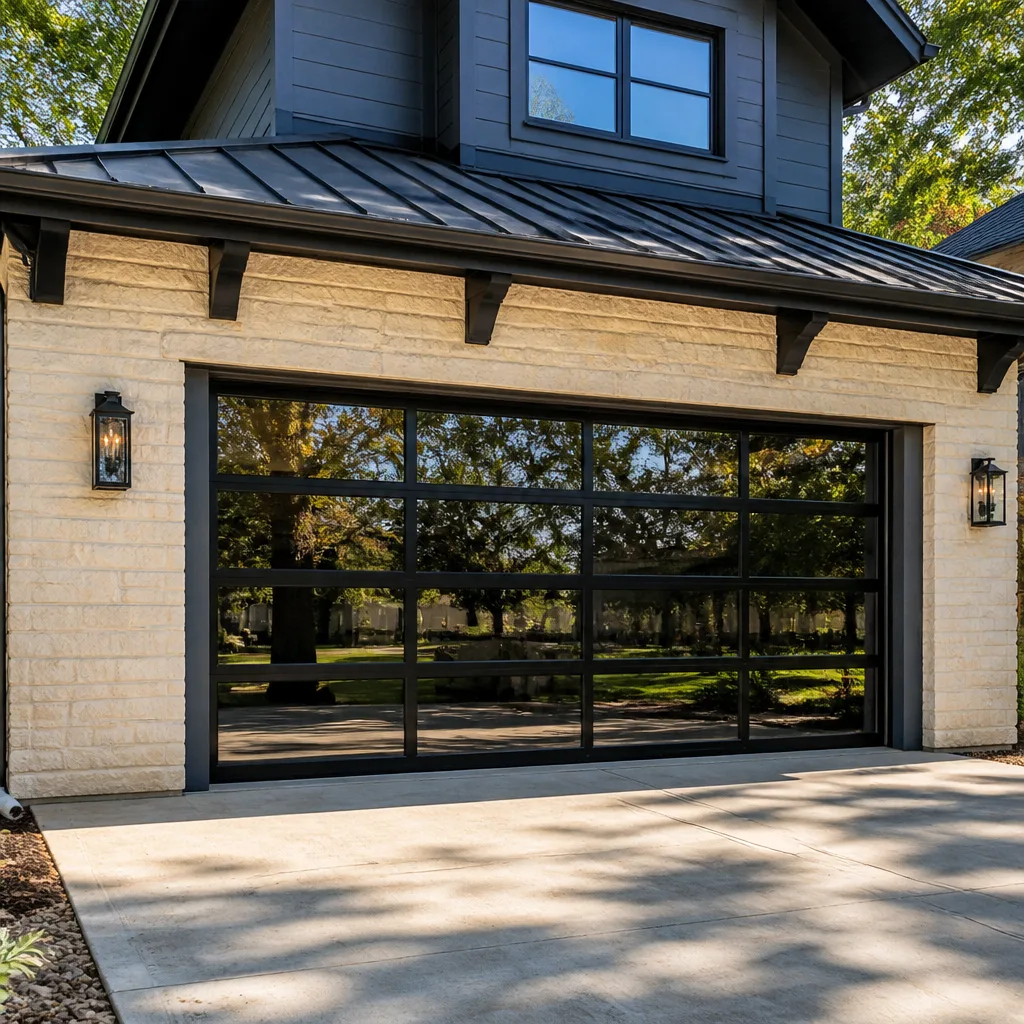 Full-view glass
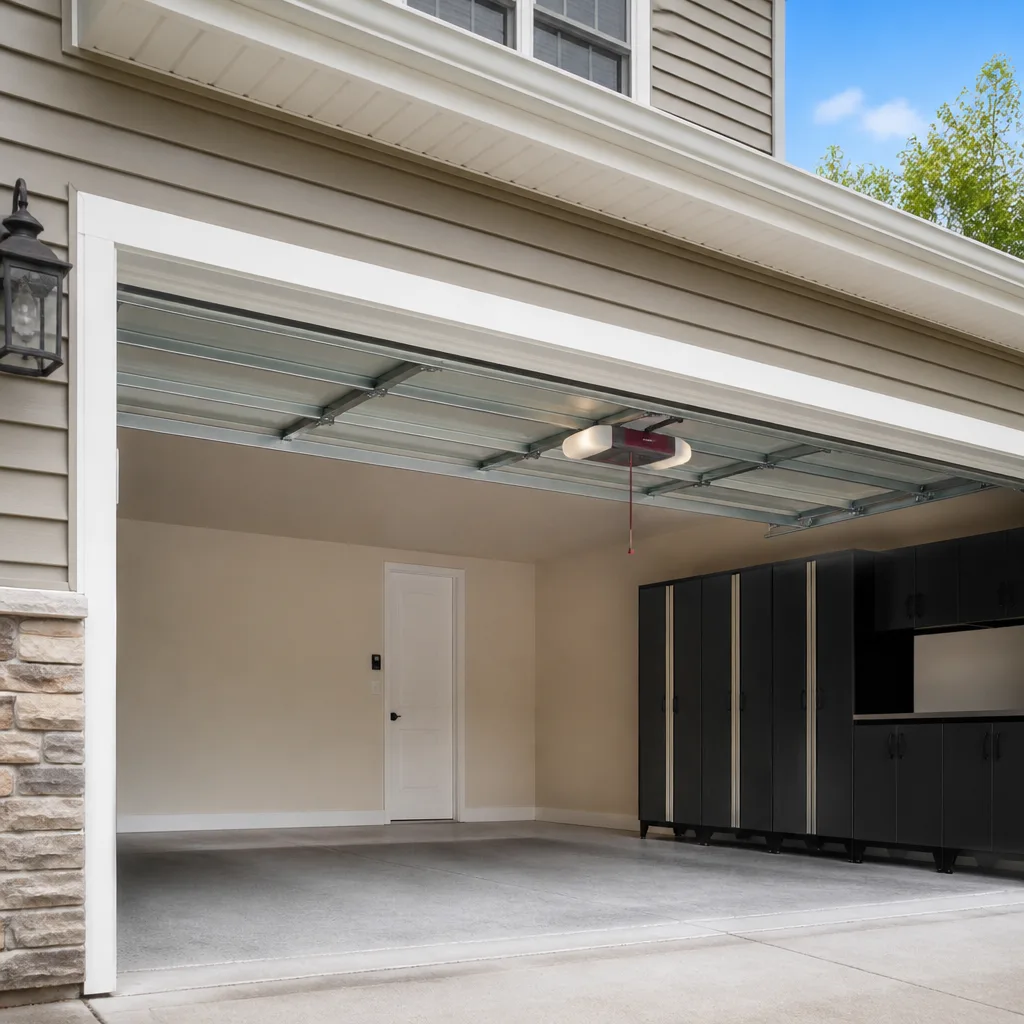 LiftMaster openers
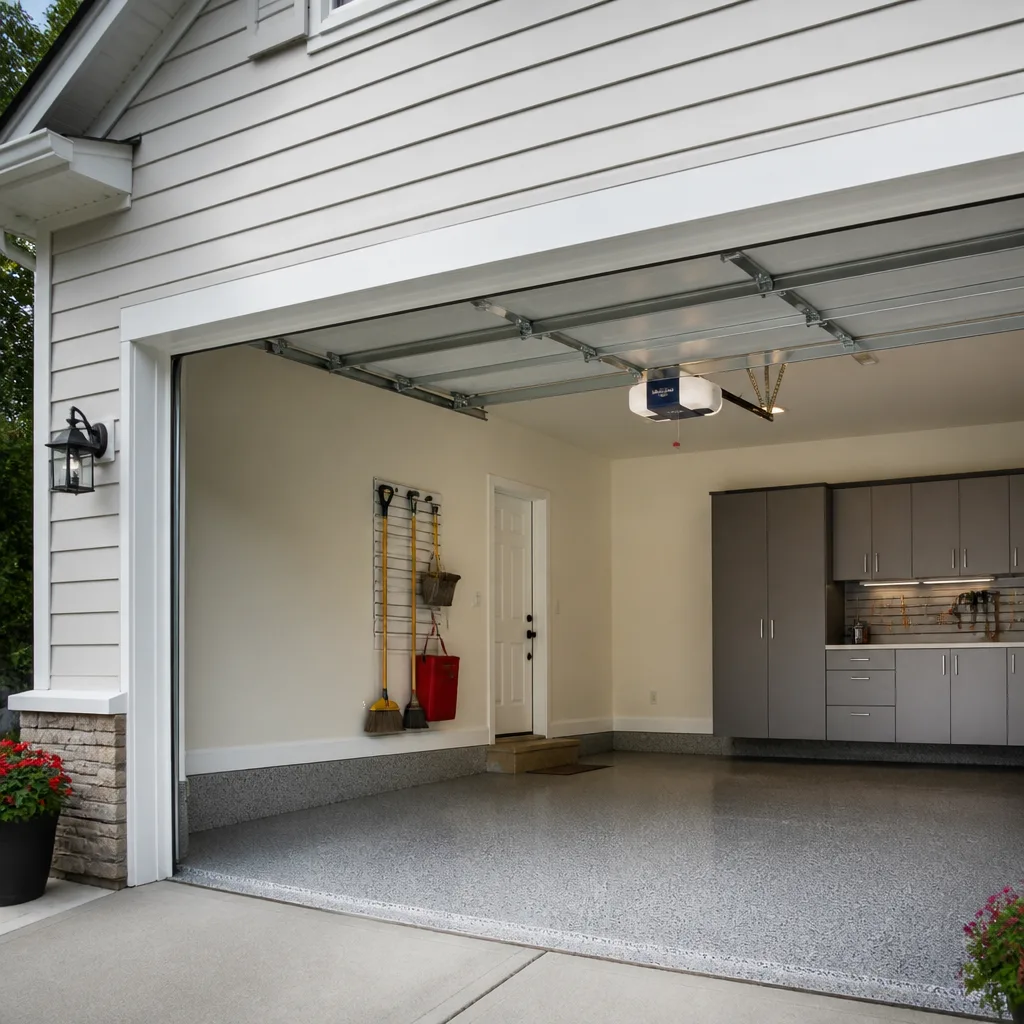 Chamberlain openers
Full 25-point door and opener safety check with every visit - springs, cables, rollers, tracks, and your LiftMaster or Chamberlain opener included
You get a price before we start. It does not change when the pro arrives.
Get your free estimateThe Complete Guide to Garage Doors in Tracy
Most garage door advice online was written for a national audience, and it shows. It talks about salt air, snow load, and freeze-thaw cycles that mean nothing here, and it skips the things that actually matter in Tracy: summers that regularly climb past 100°F, a wave of subdivisions built between 1990 and 2010, and an HOA landscape that decides what your replacement door is even allowed to look like. That gap matters. A door that’s the right call in a wet climate can be the wrong call on a sun-baked south-facing wall in Tracy. In this guide we’ll walk through how the local climate treats steel, wood, and composite doors differently, how builder-grade doors compare to a proper replacement, which brands you can actually get without waiting on a special order, and how to tell whether you need a repair, a new opener, or a whole new door. It’s the guide we wish every Tracy homeowner had before they called anyone.
Quick Answer
A garage door in Tracy usually needs replacing somewhere around the 15- to 20-year mark, largely because the housing boom of 1990 to 2010 means a lot of original builder-grade doors and openers are now failing at the same time. The right fix depends on which system is actually worn out – the door panels and hardware, or the opener and drive – and those are two different systems with two different failure patterns. Get the diagnosis right before you spend money, and the repair-or-replace decision gets a lot simpler.
Styles & brands we work with
- Raised-panel steel
- Carriage house
- Modern flush
- Full-view glass
- LiftMaster openers
- Chamberlain openers
Table of Contents
- How Tracy’s Climate Ages a Garage Door
- Steel vs. Wood vs. Composite in Tracy Heat
- What Tracy HOAs Expect From Your Door
- Builder-Grade Doors vs. a Real Replacement
- Which Brands You Can Actually Get in Tracy
- Door, Opener, or Both: Finding the Right Fix
- What Garage Door Work Costs in Tracy
- Keeping a Door Alive Through Tracy Summers
How Tracy’s Climate Ages a Garage Door
Tracy’s summers regularly push past 100°F, and that heat is the single biggest force working against your garage door. It’s not the heat alone, either. It’s the daily swing – a garage door sitting in direct afternoon sun takes on heat all day and sheds it at night, cycle after cycle, and the materials that make up that door respond at different rates. Metal expands and contracts, wood moves with moisture, and the plastic and rubber parts of the door and opener harden and crack. The result is a door that looks fine from the street while its internal health quietly declines.
Here’s where this shows up in Tracy homes:
- Paint and finish failure on sun-facing doors. A west- or south-facing steel door takes the worst of the afternoon sun. Faded paint and chalky finishes aren’t just cosmetic – once the coating breaks down, the steel underneath is exposed.
- Hardened rollers and hinges. The nylon or steel rollers that ride in the track lose their smoothness as they dry out. That’s why a door that was quiet five years ago now rattles and groans.
- Stiff, brittle weather seals. The rubber seal along the bottom of the door gets brittle in the heat and stops sealing. You feel it as dust, heat, and occasional pests getting into the garage.
- Spring fatigue. The torsion springs that counterbalance the door’s weight are under constant load, and heat accelerates their wear. A spring that’s nearing the end of its life gives you no warning until it lets go.
- Opener strain. As the door gets heavier to move, the opener works harder. That’s the hidden tax Tracy heat puts on your motorized system.
None of this happens overnight. It happens across the 15 to 20 years that a builder-grade door typically lasts, which is exactly where a large share of Tracy’s housing stock sits right now.
Steel vs. Wood vs. Composite in Tracy Heat
Material choice is the decision that most affects how long your next door lasts in Tracy, and the three common options age very differently under 100°F summers. A steel door holds its shape and resists the heat well, but the finish does the heavy lifting – when the paint or powder coat breaks down, the steel is exposed and starts to corrode. Wood and wood-composite doors can look beautiful and suit certain home styles, but they’re more sensitive to the dry heat and the daily swing; seams can open, finishes need refreshing more often, and any moisture intrusion becomes a bigger problem in a material that can swell and warp. Composite and other engineered panels fall somewhere in between, offering decent heat resistance with finishes that hold up better than raw wood but not always as long as a well-maintained steel door.
What this means in practice for a Tracy homeowner:
- Steel is the practical default for most homes here, provided the finish is maintained. It handles the heat and holds its shape.
- Wood needs more attention. It can work, but budget for periodic finish upkeep, and don’t ignore the early signs of moisture or sun damage.
- Composite is a middle path – often a good fit for homeowners who want a wood look with less maintenance, though it still deserves a close look at the finish quality.
One more guardrail: a south- or west-facing door that bakes in the afternoon sun will always age faster than a north-facing one, regardless of material. If your door faces the worst of the sun, plan for it. If your door is at the end of its life, we can help you think through materials in the context of your specific wall and exposure – that’s one of the things a free estimate covers.
What Tracy HOAs Expect From Your Door
Many Tracy neighborhoods are governed by HOAs, and those rules shape what your replacement door can actually be. This is one of the most consistently overlooked factors in garage door buying, and getting it wrong can mean a door you love is a door your HOA won’t approve. The typical pattern is that an HOA cares about the look – the color, the panel style, the material finish, and whether the new door matches the character of the neighborhood – rather than the mechanics. That means a great functional door can still fail the approval step if it doesn’t fit the design guidelines.
Before you commit to a door, work through these steps:
- Get your HOA’s current design guidelines. Rules change, and the version that applied when the neighborhood was built may not be the version that applies now.
- Check the approved color and style list. Many HOAs maintain specific pre-approved palettes and panel styles. Matching an existing approved door is often the fastest path.
- Submit the request before you order. Ask what the HOA needs to see – usually the door model, color, and sometimes a photo or spec sheet.
- Keep the approval on file. If a question ever comes up later, you have the paperwork.
Because Tracy’s HOAs vary so much from one subdivision to the next, we don’t hand you a single “approved” door. We help you match a door to your HOA’s rules and your home at the same time, and that conversation starts with a call. A little planning up front saves the headache of a rejected door later.
Builder-Grade Doors vs. a Real Replacement
The doors that went up across Tracy’s boom-era subdivisions were built to a builder’s budget, and that shows up in how they wear. Builder-grade doors are typically thinner-gauge steel or lighter panels, with basic hardware and openers sized to get the job done rather than to last decades. They were a perfectly sensible choice for a developer installing hundreds of doors at once. They are not the same product as a proper replacement door bought by a single homeowner who wants it to last. Understanding the difference is the key to knowing whether you’re being handed a real upgrade or a sideways move.
So what makes a real replacement different?
- Better material thickness and construction. A thicker gauge of steel and a more solid panel structure hold up longer under Tracy heat and daily use.
- Denser insulation. Insulation keeps the garage cooler in summer and quieter overall, and a well-built insulated door is a meaningful step up from a hollow builder-grade panel.
- Better hardware and track. The hinges, rollers, and track on a quality door are built for a longer service life than the parts most builders installed.
- A properly sized opener. Pairing the door with an opener that matches its actual weight and size avoids the strain that shortens the life of both systems.
When a builder-grade door reaches the 15- to 20-year mark, the question is rarely “can this be patched again?” but “is it worth putting more money into this door?” Often the honest answer is no. And if you’re weighing a repair against a replacement, we’ll tell you which one actually makes sense for your door, not which one is more convenient for us.
Which Brands You Can Actually Get in Tracy
Brand availability matters more in the Tracy and Stockton metro than many homeowners expect, because the door manufacturers and the opener manufacturers are not the same companies, and both sides of the system have their own availability patterns. On the door panel side, brands like Raynor, Clopay, Amarr, and Wayne Dalton cover a wide range of styles and price points, but not every model is stocked in every region – some are common, and some become a special-order wait. On the opener and drive side, LiftMaster, Chamberlain, Genie, and Craftsman are among the most widely installed systems in residential homes, which means parts and familiarity are usually good. What you don’t want is a contractor improvising around a brand they don’t really work with, or promising a door that turns out to be weeks away.
Here’s how to think about brand availability as a homeowner:
- Know which system needs attention first. Your door panels and your opener are two different products from two different makers – a door brand problem isn’t an opener brand problem.
- Ask what’s actually available locally. A good installer will tell you honestly whether a given model is a quick order or a special-order wait, rather than discovering it after you’ve signed.
- Prefer brands with deep local familiarity. A brand that technicians work with regularly means fewer surprises in installation and service.
We work with eight of the most widely installed brands in residential homes: LiftMaster, Chamberlain, Genie, Clopay, Amarr, Wayne Dalton, Craftsman, and Raynor. That breadth matters because it means we’re not steering you toward whatever single brand we happen to carry. We work on your brand, and we can tell you honestly what’s realistic for your Tracy home and timeframe.
Door, Opener, or Both: Finding the Right Fix
The single most common money-wasting mistake we see is paying to fix the wrong system first. Your garage door and your opener are two separate systems, and they fail for different reasons. A door that’s heavy or dragging is usually a door-and-hardware problem – springs, rollers, cables – while an opener that strains, reverses, or won’t respond is usually an opener problem. Replace an opener when the door itself is the actual problem, and you’ll be paying for the same call twice. Diagnose correctly the first time and you avoid that entirely.
Here’s a simple way to sort out what’s actually wrong:
- Check how the door itself moves. With the opener disengaged (the manual release), how does the door feel? If it’s heavy, stiff, or won’t stay put when you let go, the problem is likely in the door and its hardware, not the motor.
- Check the opener separately. If the door moves freely by hand but the opener still strains, reverses, or fails to open and close, the opener is the likely culprit.
- Note when both are aging. If your roof, siding, and door all date to the same build era, there’s a good chance the opener is the same age as the door – and both may be due around the same time.
When both systems are genuinely at the end of their lives, replacing them together often makes the most sense. When only one is worn out, fixing the right one saves you the cost of the other. Either way, someone needs to diagnose which is which, and that’s where a focused specialist matters. This is exactly why we treat garage door opener repair as its own dedicated service rather than an afterthought to door work. If you’re not sure which system is the problem, our free estimate starts with a real diagnosis.
What Garage Door Work Costs in Tracy
Cost is the question every homeowner asks first, and the honest answer is that it depends on what’s actually wrong – which is why the written estimate is the real price. There’s no single number for “garage door repair,” because a broken spring and a failing opener are entirely different jobs. What we can say is that the price is quoted and agreed before any work starts, so you’re never signing up for a bill bigger than the quote. That’s the standard we hold ourselves to.
Here’s how the three main categories of work break down:
- Garage door repair covers the door itself – springs, cables, rollers, hinges, track, and panel issues. The cost depends on which parts are involved and how many.
- Opener repair or replacement is priced based on the opener system and the specific failure. A drive or motor problem on your LiftMaster or Genie is a different job from a full replacement.
- New door installation is the largest of the three, priced by the door you choose, its size, and its hardware and finish.
For an exact figure on your specific door, the fastest path is a free on-site estimate. A technician will look at the actual system, tell you what’s wrong, and give you a written price before anything is done. Call (855) 473-8941 for a free estimate. There’s no charge to find out where you stand.
Keeping a Door Alive Through Tracy Summers
Most homeowners treat a garage door as maintenance-free until it breaks. In Tracy’s climate, a little routine care goes a long way toward getting you more years out of the door and opener you have. The daily heat swing makes the moving parts work harder, so the point of maintenance isn’t cosmetic – it’s about reducing wear on the parts that fail. None of this replaces a professional evaluation, but it can help you catch problems before they become expensive.
A few sensible habits for a Tracy door:
- Keep the moving parts clean and quiet. The hinges and rollers take the brunt of daily cycling. Keeping them clean and reducing friction helps them last.
- Watch the finish. On a steel door, faded or chalky paint is a warning sign that the protective coating is thinning, especially on the sun-facing side.
- Check the bottom seal. A brittle, cracking seal is one of the first things to go in the heat, and it’s a sign the door is working past its intended life.
- Listen for changes. A door that’s gotten louder or slower is telling you something. Don’t ignore it.
One important safety caveat: the torsion springs and cables that counterbalance your door are under extreme tension, and they’re the most dangerous part of the whole system. Never attempt to adjust or replace a spring or cable yourself. That work genuinely requires a trained professional, and it’s not a place for experimentation.
Common Mistakes to Avoid
- Paying to replace the opener when the door is the problem. If the door itself is heavy or dragging, a new opener won’t fix it – it’ll just work harder and fail sooner. Diagnose the actual system before spending money.
- Greasing or adjusting the springs. Springs are under dangerous tension and should only be handled by a trained technician. This is the single most common and most serious DIY mistake with garage doors.
- Ordering a door before checking HOA rules. In Tracy’s HOA-heavy neighborhoods, a door that doesn’t match the approved style or color can be rejected after you’ve already bought it.
- Choosing a builder-grade door at builder-grade quality. Replacing a worn-out builder door with the same grade gets you back to the same failure clock. If you’re replacing, replace with something built to last in this climate.
- Assuming all brand models are equally available. A model that’s common nationally can be a special-order wait in the Tracy and Stockton metro. Ask what’s actually available before committing.
- Ignoring a fading finish on a steel door. A chalky or thinning finish on a south- or west-facing door exposes the steel underneath. Catch it early and the door lasts; ignore it and it rusts.
- Waiting for total failure. A door and opener that are both 15 to 20 years old are both near the end. Waiting for one to fail completely before looking at the other often means paying for two separate emergency calls instead of one planned job.
See the difference
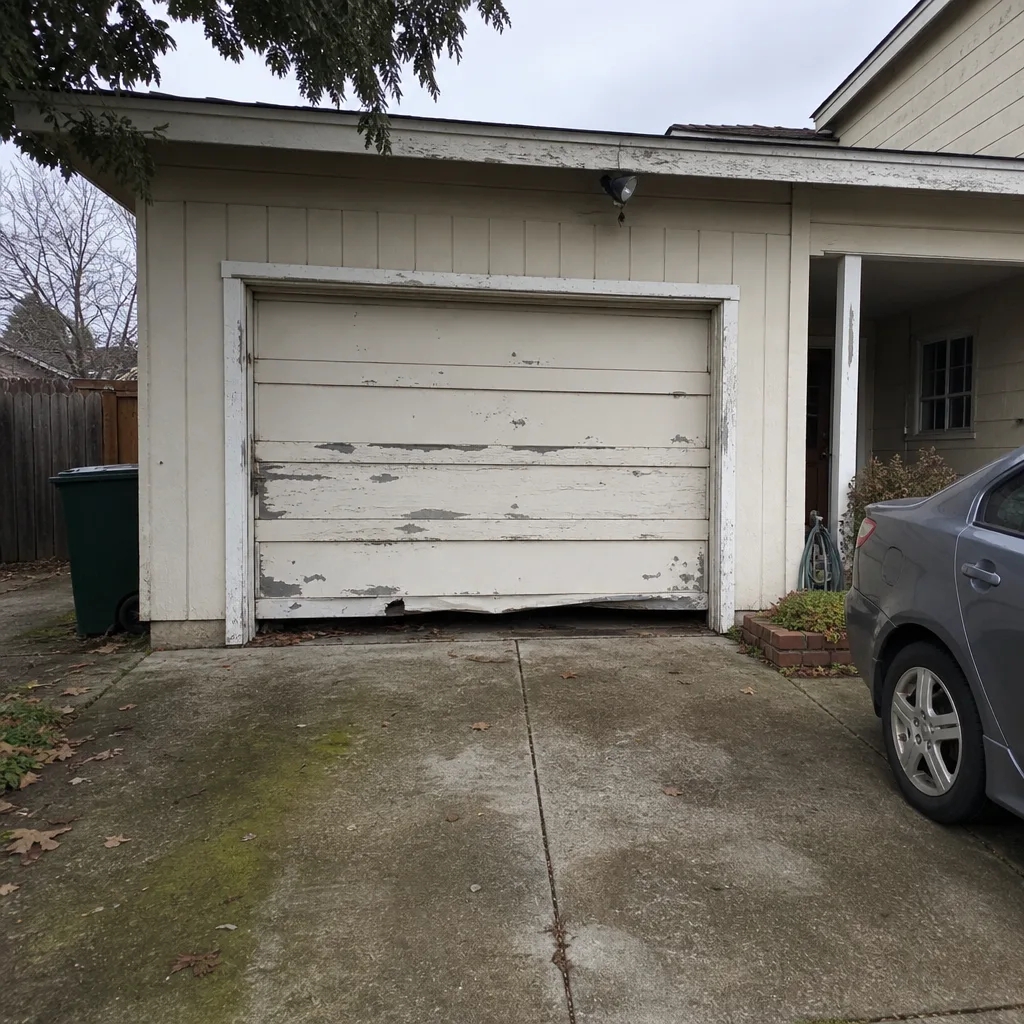 Before
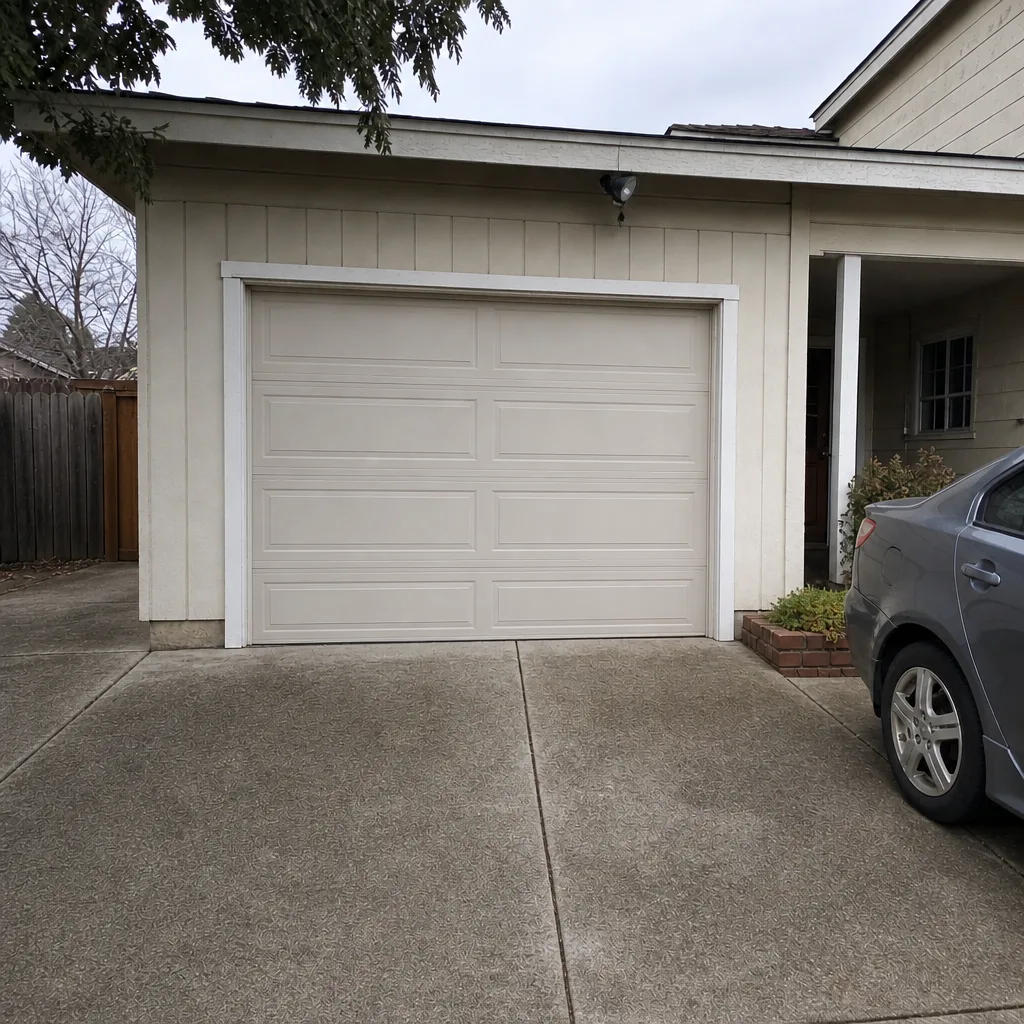 After
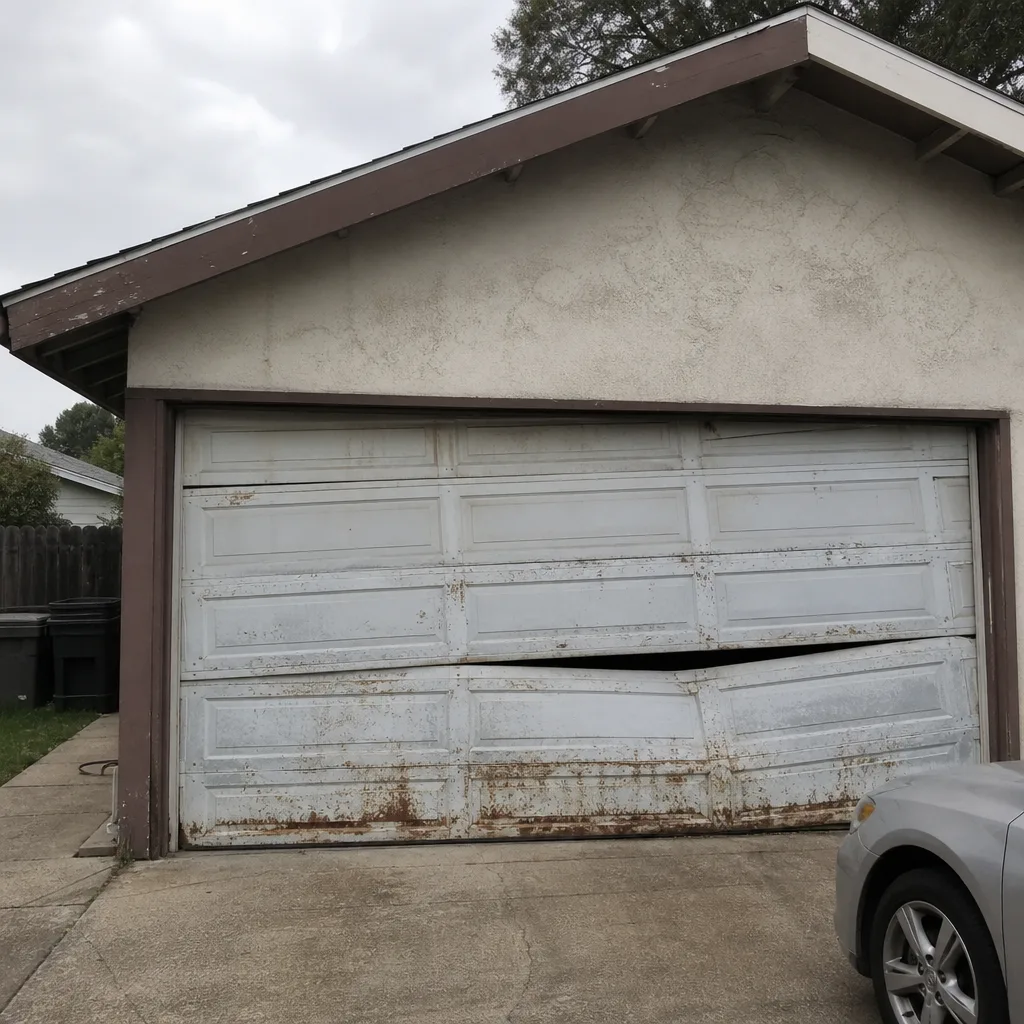 Before
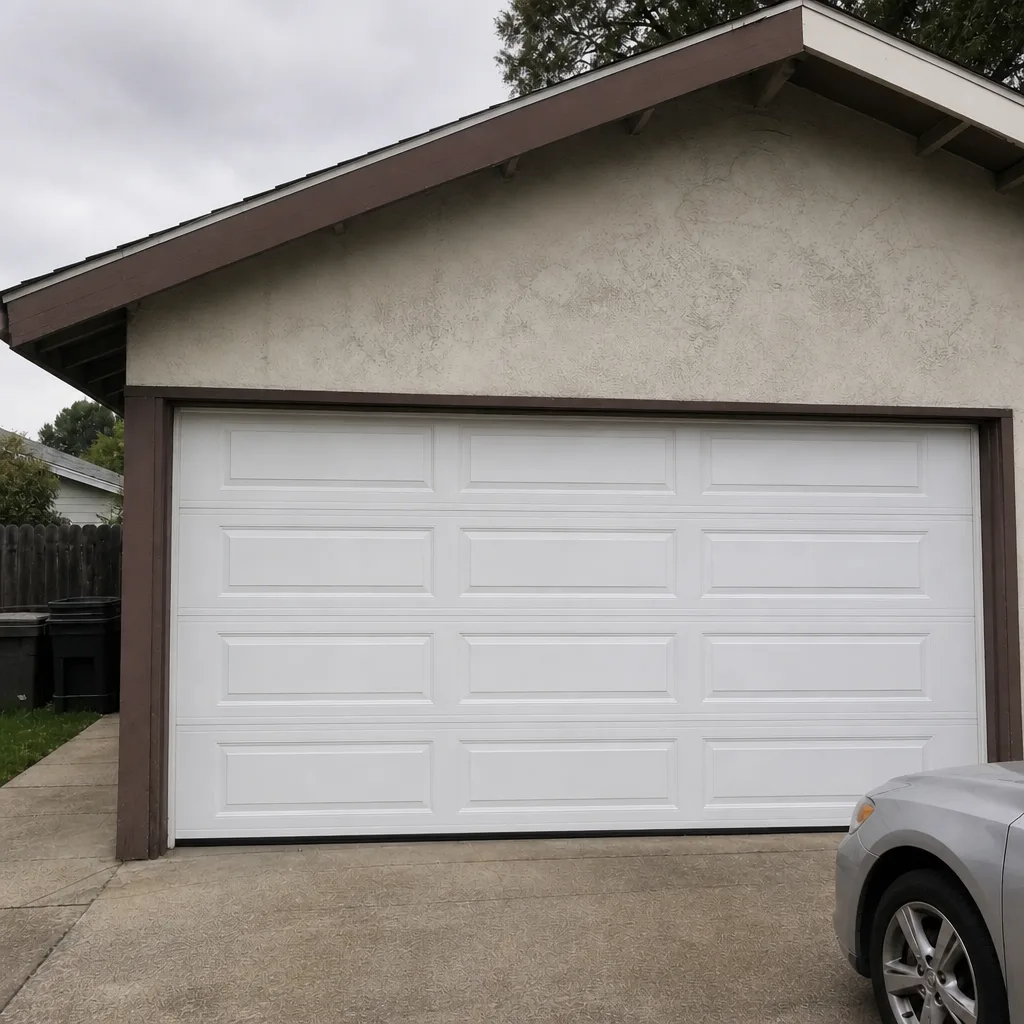 After
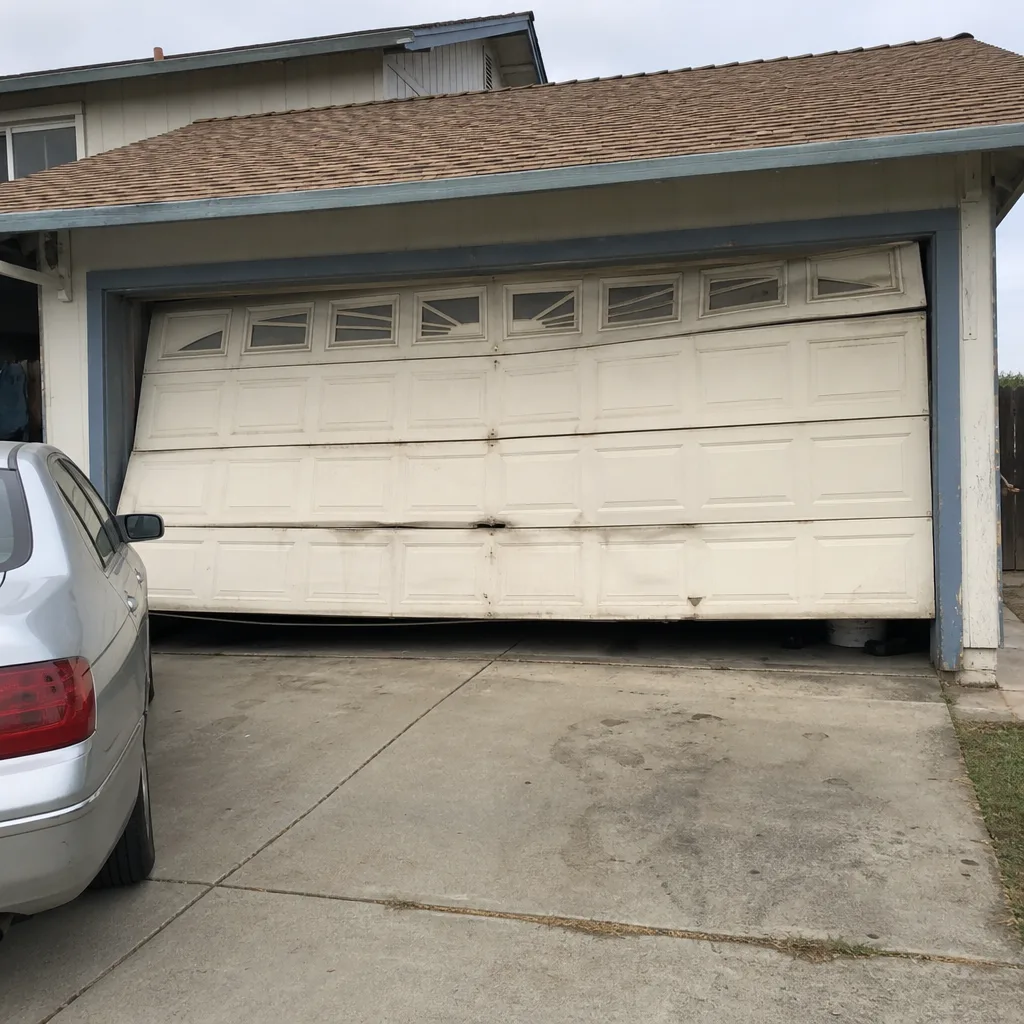 Before
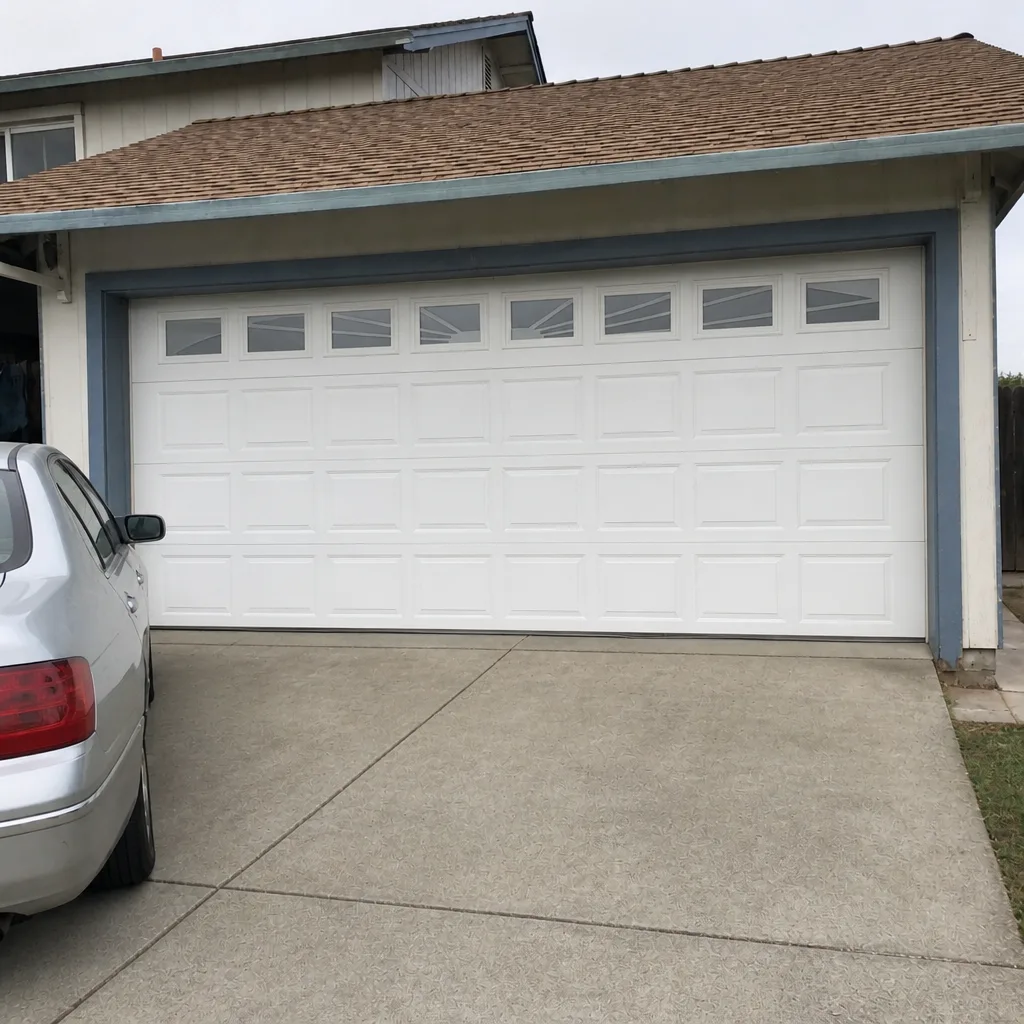 After
When to Call a Professional
Some garage door issues call for a professional, and some genuinely don’t – the trick is knowing the difference. Call us when a spring breaks (never touch it yourself), when the door is heavy or won’t stay open, when it comes off its track, when a cable snaps, or when the opener strains, reverses, or stops responding. Anything involving springs, cables, or the balance of the door belongs to a trained technician. On the other hand, if you’re simply planning a replacement – because your door is old, faded, or builder-grade – that’s a conversation, not an emergency. At Tracy Garage Door Service we offer free estimates in Tracy. Call (855) 473-8941 for a free estimate. We answer 24/7, and there’s fast dispatch from 7am to 7pm, Sunday through Friday.
Frequently Asked Questions
A garage door in Tracy typically lasts around 15 to 20 years, and a large share of the city’s housing stock sits right in that window because of the 1990 to 2010 building boom. Builder-grade doors tend to sit at the shorter end of that range, especially on sun-facing walls where 100°F summers accelerate wear on the finish, seals, and hardware. If your door is original to a home built in that era, it’s worth having it evaluated rather than waiting for a failure. Call (855) 473-8941 for a free estimate – it’s free to find out where your door stands.
Replace the opener only if the opener itself is the problem, and the door only if the door is the problem. The door and opener are two separate systems: a heavy, dragging door is a door-and-hardware issue, while an opener that strains or reverses on its own is an opener issue. If both are original to a home built between 1990 and 2010, both may be near the end and replacing them together often makes sense. A diagnosis tells you which. Call (855) 473-8941 for a free estimate.
Many Tracy neighborhoods are governed by HOAs, and many of them require approval of the door’s color, style, or material before installation. Check your HOA’s current design guidelines and submit your request before ordering, since the rules that applied when the neighborhood was built may have changed. Matching an already-approved door is usually the fastest route. We help homeowners match a door to their HOA and their home during the estimate. Call (855) 473-8941 to start.
The Tracy and Stockton metro has decent availability for most major door and opener brands, but some specific models are special-order rather than quick stock. On the door side, Raynor, Clopay, Amarr, and Wayne Dalton cover most residential needs; on the opener side, LiftMaster, Chamberlain, Genie, and Craftsman are among the most widely installed systems. Ask about timelines before committing, since a popular national model isn’t always a local quick order. Call (855) 473-8941 for a free estimate on your specific door.
A new garage door in Tracy is priced by the door you choose – its size, material, insulation, and hardware – so there’s no single number until we’ve seen your opening. The larger point is that the written estimate sets the final price, and the price is quoted and agreed before any work starts. You’ll know your figure before you commit. Installation is measured, ordered, and scheduled rather than rushed. Call (855) 473-8941 for a free estimate.
Hot Tracy summers make everything on a garage door work harder – finishes fade, seals get brittle, and heat accelerates spring fatigue, so a door that’s near the end of its life can feel noticeably heavier in July than it did in spring. A door that’s gotten harder to open is usually telling you something needs attention. Don’t ignore it, and never adjust the springs yourself. Call (855) 473-8941 for a free estimate and we’ll diagnose the actual cause. We answer 24/7, with fast dispatch from 7am to 7pm, Sunday through Friday.
The Bottom Line
Tracy is not a generic garage door market, and the right decisions here depend on local facts: 100°F summers that age finishes and springs, a 1990 to 2010 building boom that put a large share of homes at the 15- to 20-year mark, and HOAs that decide what your replacement can look like. The single most valuable step is a correct diagnosis – is it the door, the opener, or both? – because that’s what keeps you from paying to fix the wrong system. Whether you need garage door repair or a full replacement, start with an honest look at what you actually have. And if you’re ready to move, Tracy Garage Door Service is here to help homeowners across Tracy get it right the first time.
Ready to find out where your door stands? Call (855) 473-8941 for a free estimate. Our technicians have up to 14 years of experience, and the price is quoted and agreed before any work starts. We answer 24/7, with fast dispatch from 7am to 7pm, Sunday through Friday.
Written by the team at Tracy Garage Door Service.