
Last updated November 15, 2026
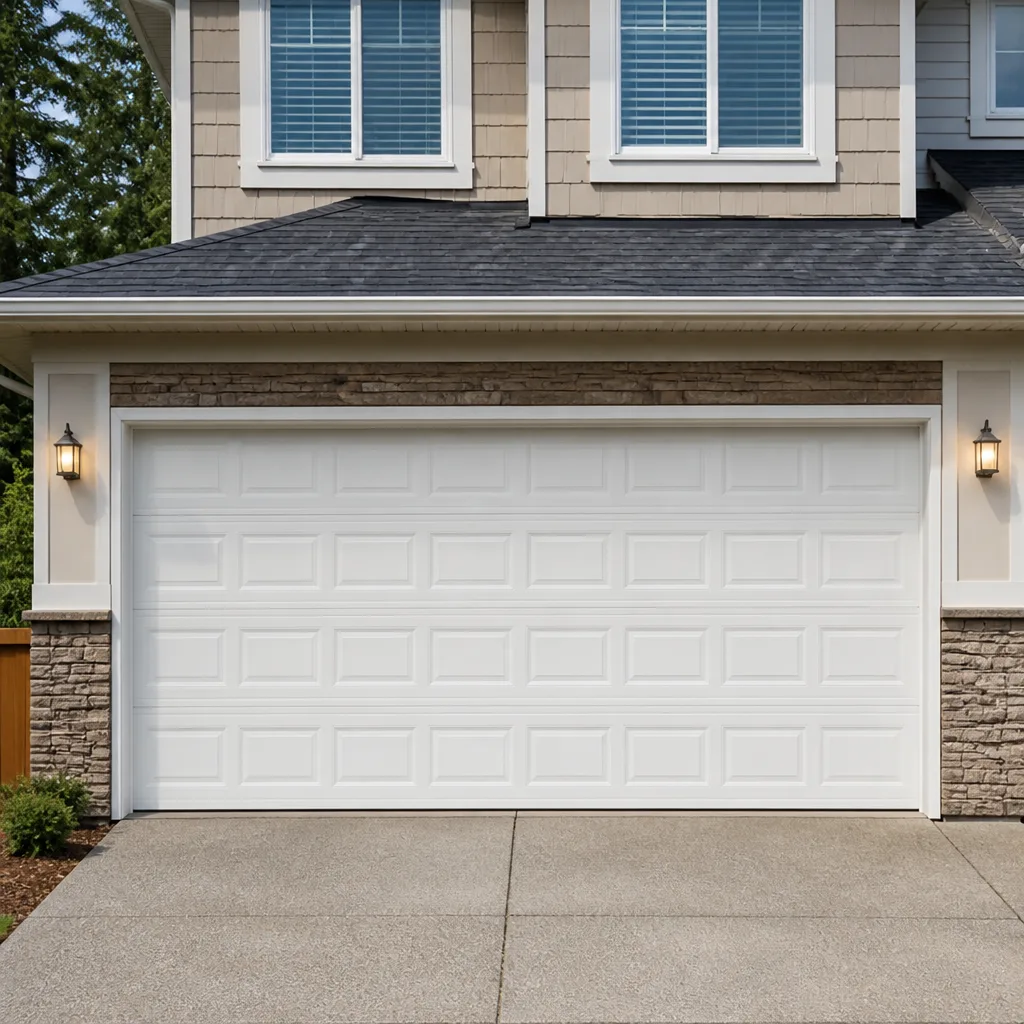 Raised-panel steel
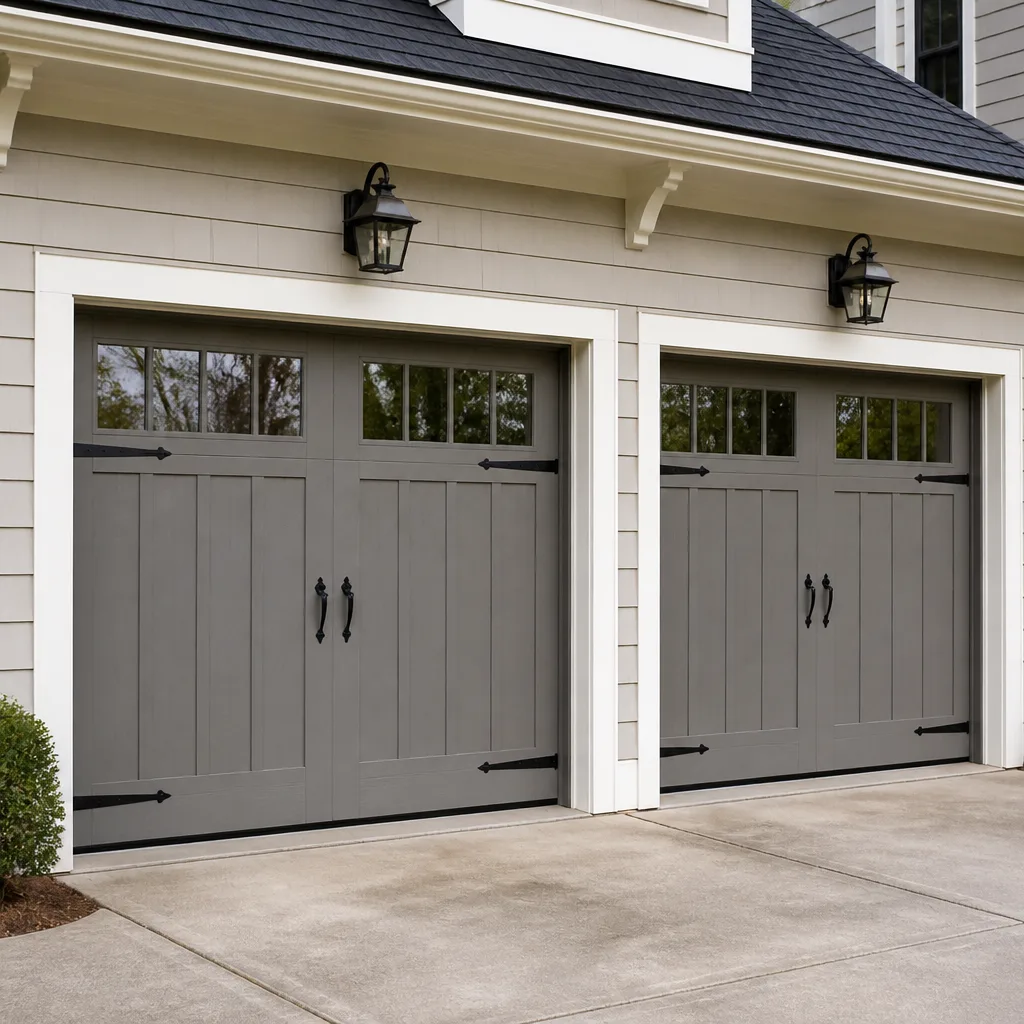 Carriage house
 Modern flush
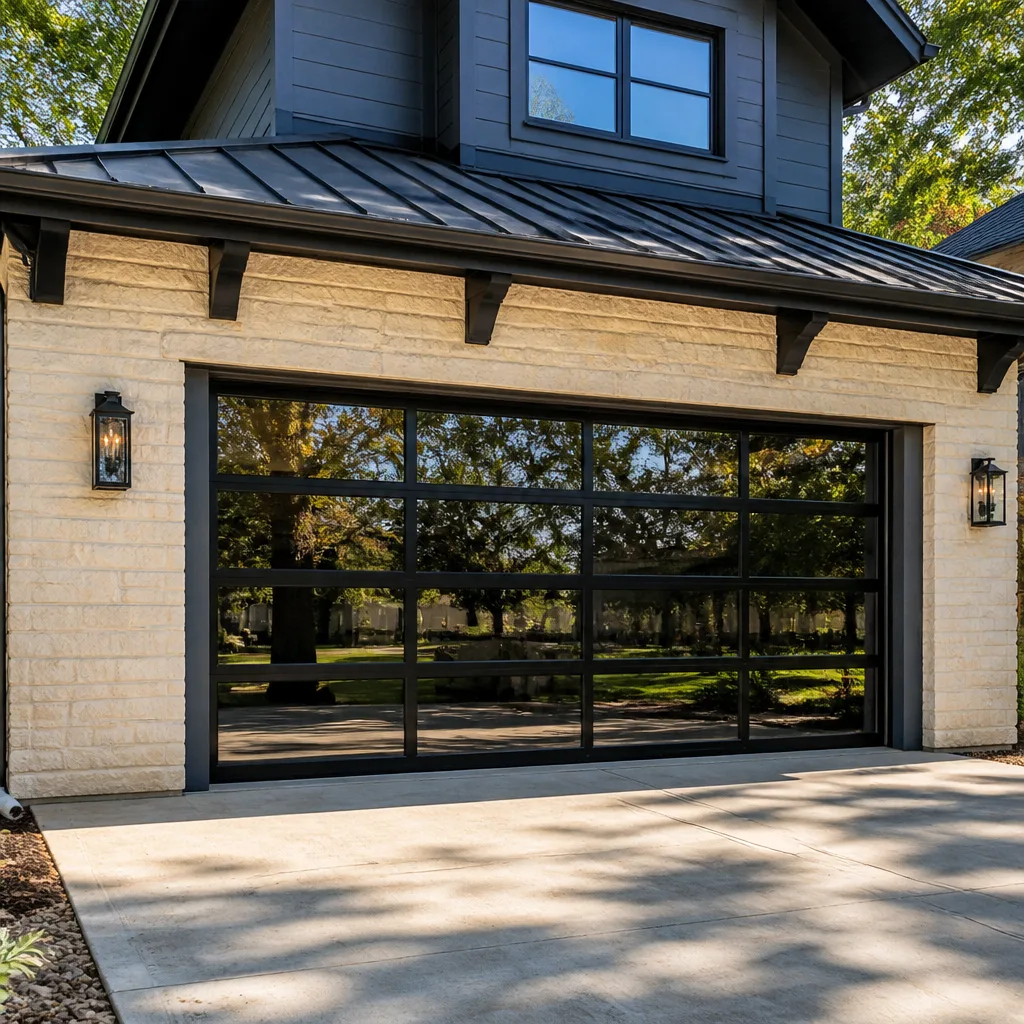 Full-view glass
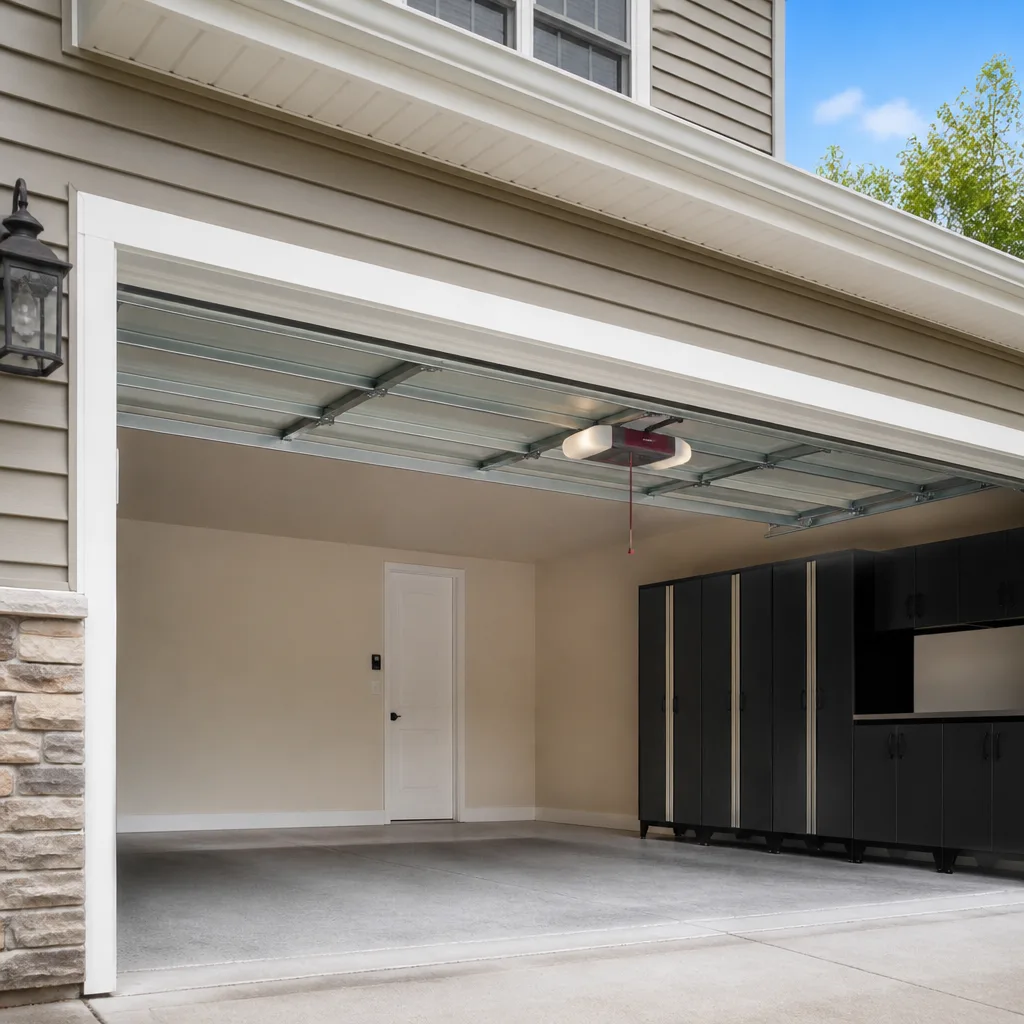 LiftMaster openers
 Chamberlain openers
Full 25-point door and opener safety check with every visit - springs, cables, rollers, tracks, and your LiftMaster or Chamberlain opener included
You get a price before we start. It does not change when the pro arrives.
Get your free estimateHow to Hire a Garage Door Contractor in Tracy: A Step-by-Step Guide
California does not require a specific garage door contractor license. That’s not a scare line, it’s a fact, and it shapes everything about how you should hire in Tracy. Anyone with a truck, a few tools and a magnet sign can legally take your money and put hands on the most dangerous springs in your home. The state’s licensing structure doesn’t hand you a garage door specialist credential to look up, so the filter falls on you. You need to know what to ask, what a real answer sounds like, and what an evasive one sounds like. This guide walks through the entire process: who’s actually qualified, the five interview questions that separate experience from guesswork, how to read an estimate line by line, and the red flags specific to the Tracy market. By the end you’ll be able to screen a contractor in ten minutes.
Quick Answer
To hire a garage door contractor in Tracy, verify the contractor’s CSLB license status and classification, ask how they handle springs and opener work, insist on a written itemized estimate with separate labor and parts warranties, and confirm they actually serve Tracy rather than just advertising to it. The best filter is a short interview about brands and failure modes: a specialist answers specifically, a generalist deflects.
Styles & brands we work with
- Raised-panel steel
- Carriage house
- Modern flush
- Full-view glass
- LiftMaster openers
- Chamberlain openers
Table of Contents
- What California Licensing Actually Covers for Garage Door Work
- The Five Interview Questions That Expose Inexperience
- How to Read a Garage Door Estimate Line by Line
- Parts Warranty vs. Labor Warranty: Why Labor Matters More
- Tracy-Specific Red Flags to Watch For
- Why a Single-Trade Specialist Beats a Generalist
- The Step-by-Step Hiring Process
- Common Mistakes to Avoid
What California Licensing Actually Covers for Garage Door Work
California does not issue a stand-alone garage door contractor license. Garage door installation and repair fall under the Contractors State License Board (CSLB), which licenses the business, not a specialty. What that means in plain terms: a contractor installing or repairing your garage door should hold a valid CSLB license with a classification broad enough to cover the work, but that license doesn’t prove they know a Clopay panel from an Amarr panel. It proves the business met the state’s minimum requirements to contract legally.
There’s a second wrinkle. Garage door work overlaps with other licensed classifications – general building, specialty trades – and the door hardware itself sits in a gray zone that the CSLB handles case by case. The practical upshot for a Tracy homeowner is that the license check is a floor, not a ceiling. A clean CSLB record tells you the contractor is legally allowed to take the job. It doesn’t tell you they’ll diagnose your opener correctly or that they’ve replaced a torsion spring on your specific door model.
To check a license, use the CSLB website’s license lookup. You’ll see the business name, license number, classification, expiration date and any complaints or disciplinary actions. Ask for the license number before any work starts and match it to the name on the estimate. If the person who shows up can’t produce a license number that matches, that’s your answer.
Three things to verify before you hire:
- Active CSLB license in good standing, with the classification covering garage door work.
- Liability insurance and workers’ compensation – ask for a certificate of insurance and call the carrier to confirm it’s current. A contractor without workers’ comp is passing that risk to you.
- A physical business presence – a real phone number, a real address, and a service footprint that includes Tracy.
The licensing floor exists to protect you from the worst outcomes. The rest of this guide is about clearing the bar that the license itself can’t measure: whether the person touching your springs and opener actually knows what they’re doing.
The Five Interview Questions That Expose Inexperience
You can screen a garage door contractor with a five-minute phone call. The trick is asking questions a specialist answers without thinking and a generalist fumbles. Here are the five that work, with what a strong answer sounds like and what a weak one reveals.
-
“What brand of opener do you work on most, and how does it differ from the others?” A specialist names brands immediately – LiftMaster, Chamberlain, Genie – and can describe the differences in drive systems, safety sensors, and programming. Someone who pauses and says “we work on all of them” without specifics is telling you they treat every opener the same. They don’t fail the same way, and they don’t program the same way.
-
“My door is heavy to lift. What are the likely causes?” A strong answer mentions broken or worn torsion springs, cable issues, roller and track alignment, and possibly a failing opener if the door is automatic. A weak answer guesses at the opener motor or says they’ll “take a look.” The door and the opener are two separate systems, and a contractor who can’t separate them in conversation won’t separate them on the job.
-
“Do you replace both springs when one breaks?” This is a diagnostic question disguised as a policy question. A knowledgeable contractor explains that matched springs wear at the same rate, so replacing one usually means the other is close behind. Someone who says “we only replace what’s broken” without a conversation about matched pairs is either inexperienced or courting a callback.
-
“How do you read a garage door estimate?” A specialist can walk you through what should be itemized: springs, tracks, rollers, panels, opener and labor. A generalist gives you one lump sum and hopes you don’t ask. The estimate is your map of the job, and a contractor who can’t explain theirs doesn’t have a firm grip on it.
-
“What happens if the repair fails in the first month?” A strong answer gives you a specific labor warranty with a number attached. A weak answer says “we stand behind our work” and changes the subject. The labor warranty is the real test of confidence, and we’ll come back to it.
Ask these questions before you book an appointment. If a contractor can’t answer two of the five clearly, you’ve saved yourself a badly measured job. Our technicians have up to 14 years of experience, and the difference between that and a two-week installer shows up in exactly this conversation.
How to Read a Garage Door Estimate Line by Line
A garage door estimate should be itemized, in writing, and specific enough that you could hand it to a different contractor and they’d know exactly what was quoted. If it reads like a single number with “garage door repair” next to it, that’s not an estimate, it’s a guess with a price tag. Here’s what a good one looks like.
What should be itemized:
- Parts by name and quantity. “Two torsion springs, matched pair” is itemized. “Springs” is not. The same goes for tracks, rollers, hinges, cables, drums, panels and the opener itself.
- Labor as a separate line. You want to know what the work costs, not just the hardware. Labor and parts carry different warranty terms, and mixing them makes the warranty ambiguous.
- Brand and model, where the parts are branded. A Clopay panel is not the same as a generic panel, and an Amarr door isn’t interchangeable with either. The estimate should say which.
- Permit responsibility, if a permit is needed. For most garage door replacement, ask your city’s building department whether a permit is required and who pulls it. The estimate should state clearly who handles it.
- Warranty terms, spelled out. Both parts and labor, with a number of months or years next to each.
- The total, and what it doesn’t cover. Anything excluded from the price – disposal, painting, electrical work for a new opener – should be named.
What vague line items signal: A lump sum with no breakdown usually means one of two things. Either the contractor hasn’t actually diagnosed the problem, or they’re leaving room to add charges once the door is apart. Neither is what you want. A line item like “misc. parts” or “adjustment labor” is a hole in the estimate, and you’ll find out how big it is when the job is done.
When we write an estimate for a job in Tracy, the written quote sets the final price. The number you agree to before work starts is the number you pay if the job matches the diagnosis. If something unexpected turns up once the door is open, that should be a conversation and a revised written quote before any additional work happens, not a surprise on the invoice.
Compare at least two estimates, and compare them line by line. The cheapest total isn’t always the cheapest job, and the most expensive one isn’t automatically the most careful. What matters is which estimate you can actually read.
Parts Warranty vs. Labor Warranty: Why Labor Matters More
The parts warranty is the one every contractor talks about. The labor warranty is the one that decides whether you’re covered when something goes wrong. They are not the same, and the difference is where most homeowners get caught.
A parts warranty covers the hardware itself – the spring, the opener, the panel. It’s usually provided by the manufacturer, and it may be generous. Ten years, sometimes longer, on a door panel. The catch is that the parts warranty only covers the part, not the hours spent putting a new one in. If a spring fails under warranty, you may get the spring for free and still pay full labor to have it replaced. That’s a real cost, and it’s the one homeowners don’t see coming.
A labor warranty covers the work itself – the installation and the repair. This is the contractor’s promise that if the job fails because of how it was done, they’ll come back and fix it without charging you again. It’s the number that tells you how confident the contractor is in their own hands.
Why labor matters more: most garage door failures within the first year are installation failures, not manufacturing failures. A torsion spring breaks prematurely because it was wound wrong or the door was out of balance. An opener fails early because the travel limits were set sloppily or the force was dialed up to compensate for a misaligned door. Those are labor problems, and a parts warranty won’t touch them.
What to ask before you sign:
- What’s the labor warranty, in months or years, and does it cover the full repair or just a return visit?
- Is the parts warranty from the manufacturer or from the contractor, and what does it exclude?
- If a repair fails in the labor warranty period, is the return visit free, including any parts?
- Does the warranty survive if you sell the house? Some transfer, some don’t.
Get the answers in writing. A verbal “we stand behind it” is worth exactly as much as the paper it’s written on, which is nothing.
Tracy-Specific Red Flags to Watch For
Tracy sits on the western edge of the San Joaquin Valley, positioned between the Bay Area and the valley floor, and that geography creates a particular kind of hiring hazard. A company can run ads that target Tracy, rank for Tracy searches, and still have no actual service infrastructure here. When the door fails, someone has to drive out. If nobody’s local, the drive becomes your problem, whether it shows up as a scheduling window that keeps slipping or a no-show.
Here’s what to watch for:
- Out-of-area companies running local ads. The phone number is a call center, the address is a mailbox, and the technician is dispatched from somewhere else. Ask directly: “Who actually comes out, and where are they coming from?” A vague answer is a red flag.
- Pressure to decide on the spot. Any language that pushes you to sign before you’ve compared estimates is a sales tactic, not a service. A confident contractor can wait a day for your decision.
- No written estimate. A verbal quote on a garage door repair is not an estimate. If they won’t put it in writing before the work starts, don’t let them start.
- Unmarked vehicles and no license number. Not every legitimate small contractor has a wrapped truck, but a license number and proof of insurance should be available on request. If not, walk.
- One-size-fits-all answers about brands. In a market that spans newer construction and older homes across Tracy, the doors and openers vary. A contractor who treats every system the same hasn’t seen enough of them.
- Spring pricing that seems too good. Springs are the most common repair and the most commonly cheapened. Ask what kind of spring, how many, and whether it’s a matched pair.
None of this is about whether a company is large or small. It’s about whether the person who shows up knows the hardware in your home and can be reached when something fails. A specialist who answers specifically and puts the price in writing is what you’re looking for, and that’s the standard we hold ourselves to.
Why a Single-Trade Specialist Beats a Generalist
The garage door is two systems bolted together: the door itself and the opener that drives it. They fail for completely different reasons, and diagnosing one as the other is the most common mistake in this trade. That’s the core argument for hiring a single-trade specialist rather than a general handyman or a big-box installer.
On the door side, you’re dealing with panels, tracks, rollers, hinges, cables, and the torsion or extension springs that counterbalance the weight. On the opener side, you’re dealing with the motor, the drive system, the safety sensors, the travel limits, and the logic board. A door that’s heavy to lift can make a healthy opener fail. A failing opener can make a healthy door seem broken. The specialist knows the difference because that’s all they do.
The brand dimension matters just as much. We work with eight of the most widely installed brands in residential homes. On the door panel side, that includes Clopay and Amarr alongside Wayne Dalton and Raynor. On the opener and drive side, it includes LiftMaster, Chamberlain, Genie and Craftsman. Working on your brand means working with the actual hardware in your home, not an approximation. It means knowing how a Genie safety sensor behaves differently from a Chamberlain, and how a Clopay panel alignment differs from an Amarr.
Three structural advantages of a specialist:
- Correct diagnosis the first time. When the door and the opener are both in scope, there’s no handoff and no “that’s the other guy’s problem.”
- No bouncing between contractors. The company that installs your door can repair it and service its opener years later. One call covers the whole life of the system.
- Honest repair-or-replace advice. A specialist who handles both installation and repair has no incentive to push a new door when a repair makes sense, or vice versa. They can tell you which one actually fits the situation.
Our focus is garage doors, repair and installation. Not plumbing, HVAC or general contracting. Every dollar of training and tooling goes into this one trade, and that focus is what lets us diagnose correctly rather than guess. You can read more about the full scope of what we cover on the main Tracy Garage Door Service page.
The Step-by-Step Hiring Process
Here’s the process to follow, in order, from the moment you notice a problem to the moment the job is done.
- Note what’s actually wrong. Is the door heavy, noisy, off its tracks, or stuck partway? Does the opener run without moving the door, reverse unexpectedly, or stop responding? Write it down so you can describe it clearly on the phone.
- Look up the contractor’s CSLB license. Check the license number, classification, expiration and any disciplinary record. Match it to the name on the estimate.
- Ask the five interview questions. Brand familiarity, likely causes, spring replacement policy, estimate structure, and labor warranty. Grade the call.
- Confirm they actually serve Tracy. Ask who comes out and where they’re dispatched from. A local footprint matters when something needs a return visit.
- Get a written, itemized estimate. Separate lines for parts and labor, brands named, warranty terms spelled out, total and exclusions clear.
- Compare at least two estimates side by side. Look at the line items, not just the totals. The better estimate is the one you can read and the one that covers its own work.
- Agree, in writing, before any work starts. The written quote sets the final price. Nothing should be added mid-job without a revised written quote first.
- Keep the paperwork. Estimate, warranty terms, and the license number. If a repair needs a return visit inside the labor warranty, that paperwork is what you’ll reference.
If you’ve got a working door and an opener that’s begun to hesitate, this is also the moment to think about garage door opener repair before the motor fails outright. Diagnosing a weak opener early is cheaper than replacing it after it burns out.
A garage door that’s stuck, off its tracks or failing mid-cycle is a safety problem, and it’s the one case where you skip the comparison shopping and make the call. We’re glad to help Tracy homeowners get the door working again. For straightforward problems, garage door repair is where we start. Call (855) 473-8941. We answer 24/7. Fast dispatch from 7am to 7pm, Sunday through Friday.
Common Mistakes to Avoid
- Skipping the CSLB check because someone seemed trustworthy. Talk is cheap. A license lookup takes two minutes and confirms the business is legally allowed to do the work.
- Accepting a verbal estimate. A spoken quote is unenforceable. Without it in writing, you have nothing to compare and nothing to hold anyone to if the invoice grows.
- Ignoring the labor warranty. Most early failures stem from installation, not the parts themselves. A good parts warranty with a weak labor warranty leaves you exposed.
- Hiring a generalist to “take a look.” A handyman can get a door moving again without fixing what made it fail. In a trade with no stand-alone license, specialization is the only credential that means anything.
- Replacing only one spring when both are worn. Matched springs wear together. Replacing one usually means the other is close behind, and you’ll be paying for a second visit.
- Choosing an out-of-area company based on an ad. Ads target Tracy without requiring a local service footprint. Confirm who actually comes out before you book.
- Letting work start before the scope is agreed. The written quote is the price. Any change to the scope should trigger a revised quote before more work, not after.
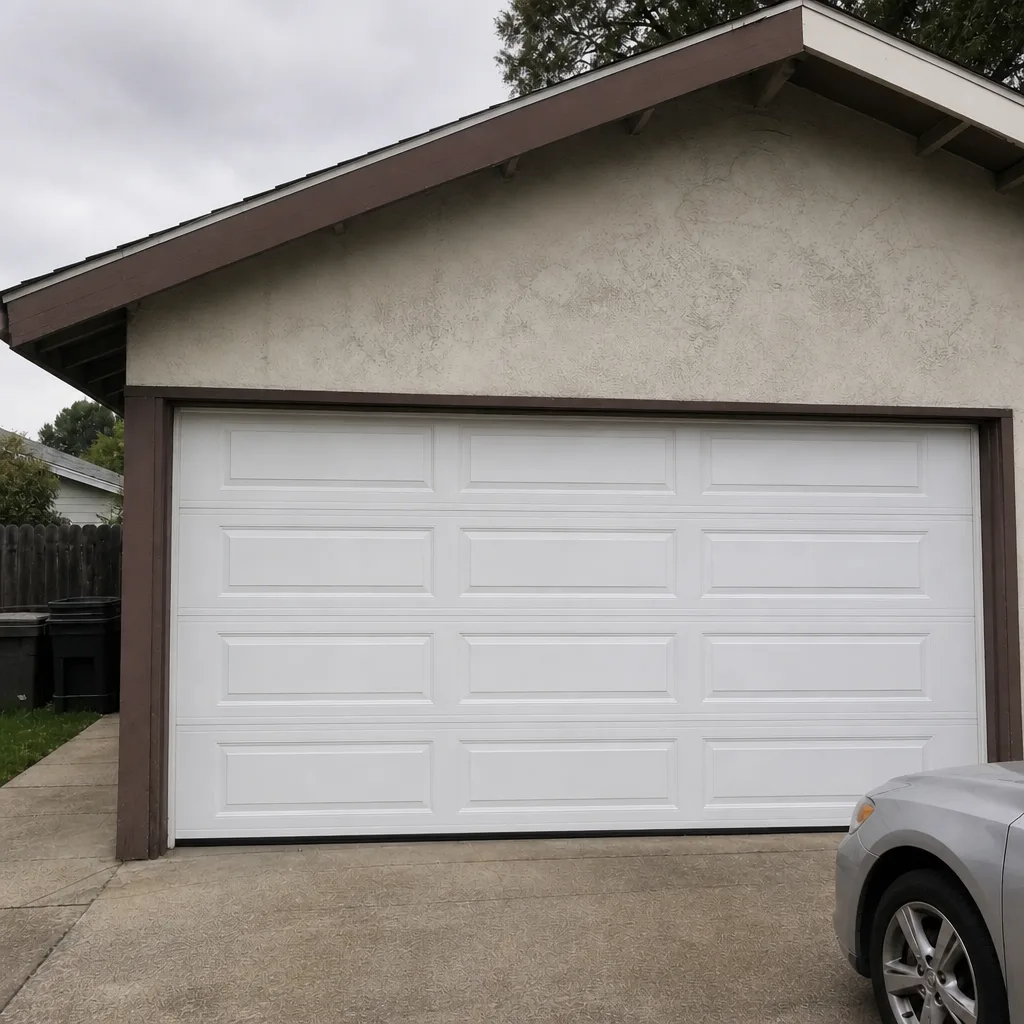
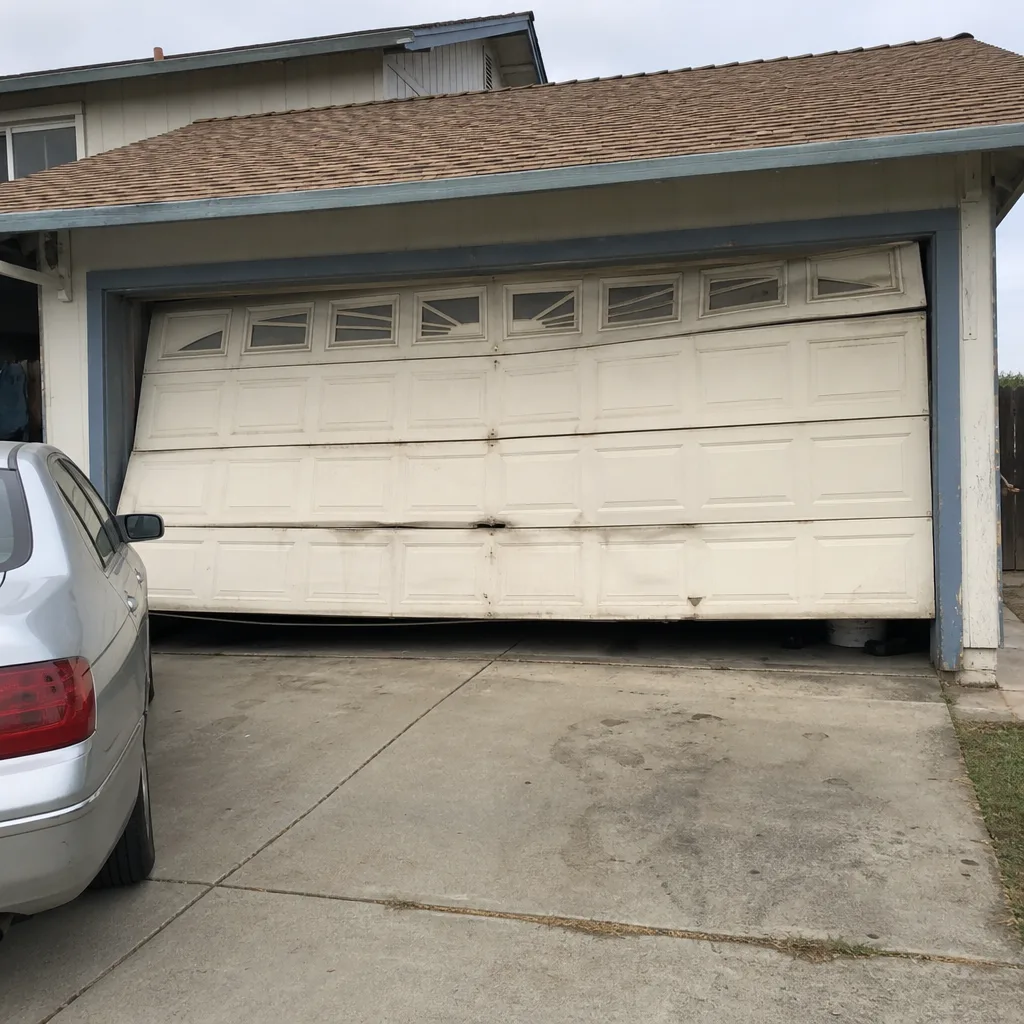
See the difference
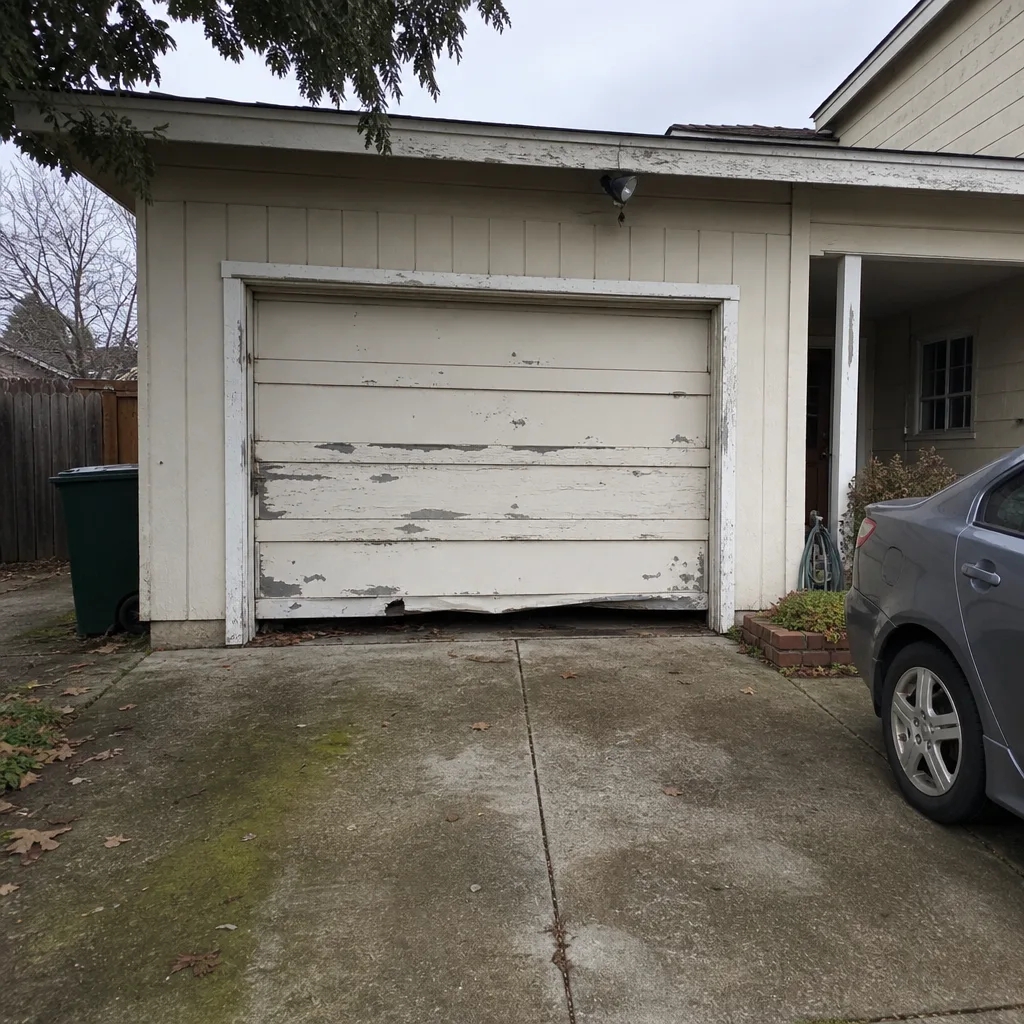 Before
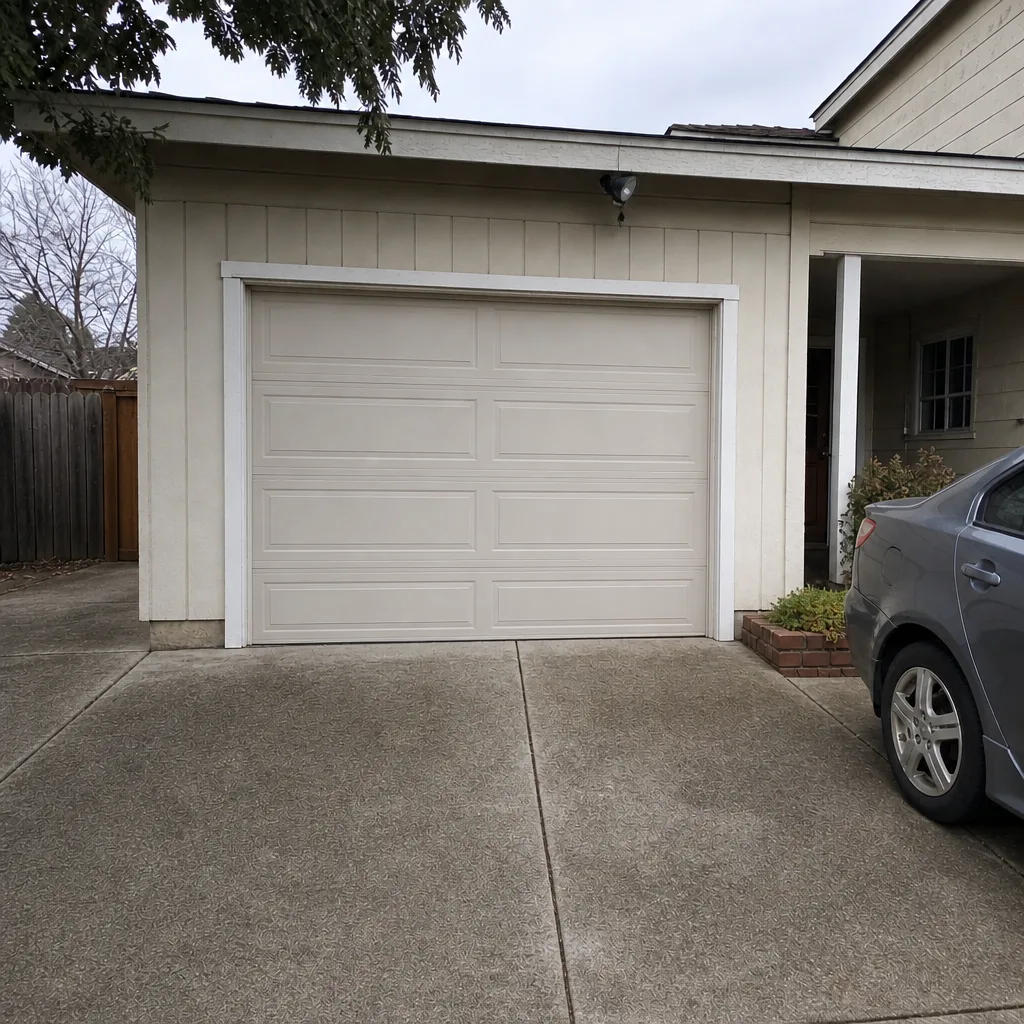 After
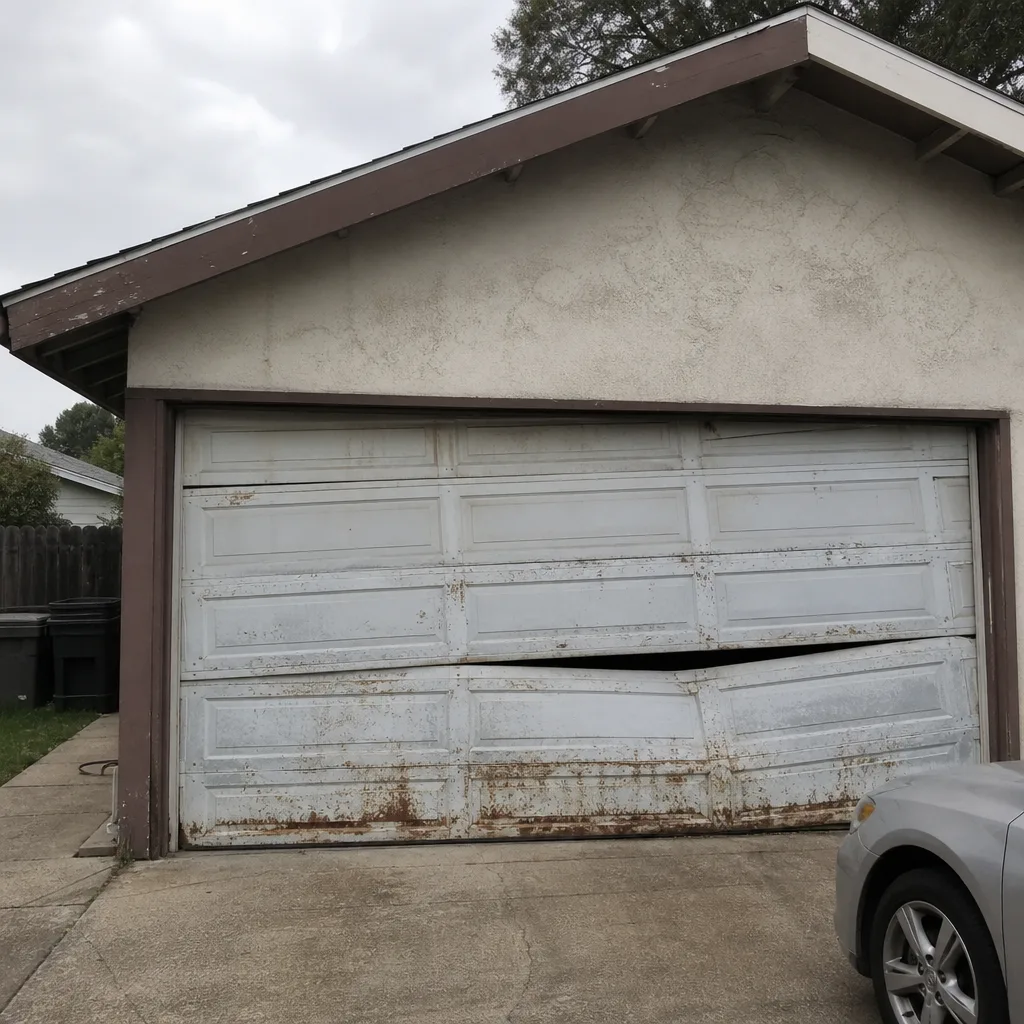 Before
 After
 Before
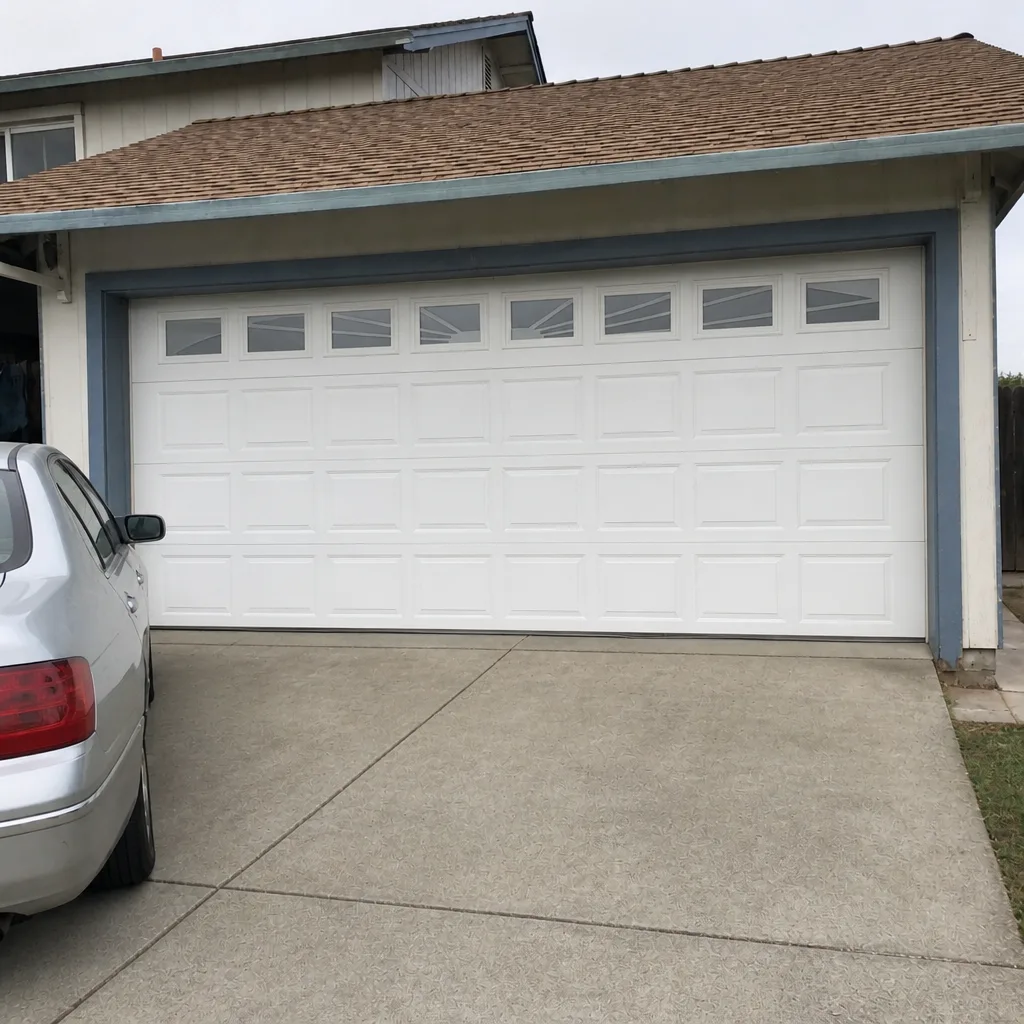 After
When to Call a Professional
Some garage door problems are cosmetic. Most aren’t. Call a professional if the door is heavy to lift by hand, if it comes off its tracks or hangs crooked, if the springs are visibly broken, if the opener runs without moving the door, or if the door reverses unexpectedly or stops partway. Any of those is a diagnosis problem, and some are a safety problem. The torsion springs and cables on a residential door are under high tension, and they’re the single most dangerous component to handle without training. Don’t put your hands on them. An opener that’s failing is a different system and a different diagnosis, but the rule is the same: get it looked at before it leaves your car stranded inside.
Tracy Garage Door Service offers free estimates – call (855) 473-8941. We answer 24/7. Fast dispatch from 7am to 7pm, Sunday through Friday.
Frequently Asked Questions
Yes, you should hire a CSLB-licensed contractor for garage door work in Tracy, even though California does not issue a stand-alone garage door license. The CSLB licenses the business and its classification, so verify the license is active and covers the work before hiring. Ask for the license number and check it on the CSLB website. Call (855) 473-8941 for a free estimate.
Garage door repair costs in Tracy vary by the job, and the written estimate is the only number that matters. A spring replacement, a cable or roller replacement, a track repair and an opener repair all carry different parts and labor costs, so there’s no single range that fits every call. Get an itemized written estimate before work starts, and treat the quote as the final price. Call (855) 473-8941 for a free estimate – estimates are free.
Ask five questions: which opener brands they work on and how those brands differ, what the likely causes are for your specific symptom, whether they replace both springs when one breaks, what the written estimate will itemize, and what the labor warranty covers. A specialist answers each one specifically. A generalist deflects. Call (855) 473-8941 and we’ll walk you through it.
Usually not. The parts warranty covers the hardware itself, often for years, but it typically excludes the labor to install a replacement part. The labor warranty is the contractor’s own promise to cover the work, and it matters more because most early failures stem from installation. Get both terms in writing before you sign. Call (855) 473-8941 for a free estimate.
You can, but confirm first that they actually have a service footprint in Tracy. Companies can advertise locally without holding any infrastructure here, which turns a return visit into a scheduling problem. Ask who comes out and where they’re dispatched from. A clear, direct answer is what you want. Call (855) 473-8941.
It depends on the door’s condition and the repair involved. A single broken spring, a damaged roller or a failing opener is a repair. A cracked or delaminated panel, a bent track that won’t align, or a door that’s rattling and drafty beyond easy repair may point toward replacement. A specialist can tell you which one fits, and you can read more about our Tracy coverage and full scope. Call (855) 473-8941 for a free estimate.
The Bottom Line
Hiring a garage door contractor in Tracy comes down to four filters: verify the CSLB license, ask the five questions, insist on a written itemized estimate, and read the labor warranty before you sign. California doesn’t hand you a garage door specialist credential to look up, so the questions you ask are the credential. A specialist answers specifically about brands like Clopay and Amarr, separates the door system from the opener system, and puts the price in writing. A generalist guesses. Use the interview, the estimate and the red flags in this guide, and you’ll pick the right contractor for the job.
Ready to get it diagnosed correctly the first time? Call Tracy Garage Door Service at (855) 473-8941 for a free estimate. We answer 24/7. Fast dispatch from 7am to 7pm, Sunday through Friday. We work on the brand in your home, repair or replace based on what actually makes sense, and quote the price before any work starts.
Written by the team at Tracy Garage Door Service.